A collection point is created
We work with your RWA or society management to place a Pehli Roti box at an accessible spot, usually near the main gate or the guard post. We supply and fit the box. The society only has to approve the spot.
Four steps, and only one of them involves you.
Your society provides an accessible place for a Roti Box. Families contribute the roti they were already making. From there, our collection route takes over.
Your part ends when the roti goes into the box.
WE HANDLE EVERYTHING AFTER THAT.We work with your RWA or society management to place a Pehli Roti box at an accessible spot, usually near the main gate or the guard post. We supply and fit the box. The society only has to approve the spot.
Households place the first roti of the day in the box. Most give one. Some give more. Both are fine.
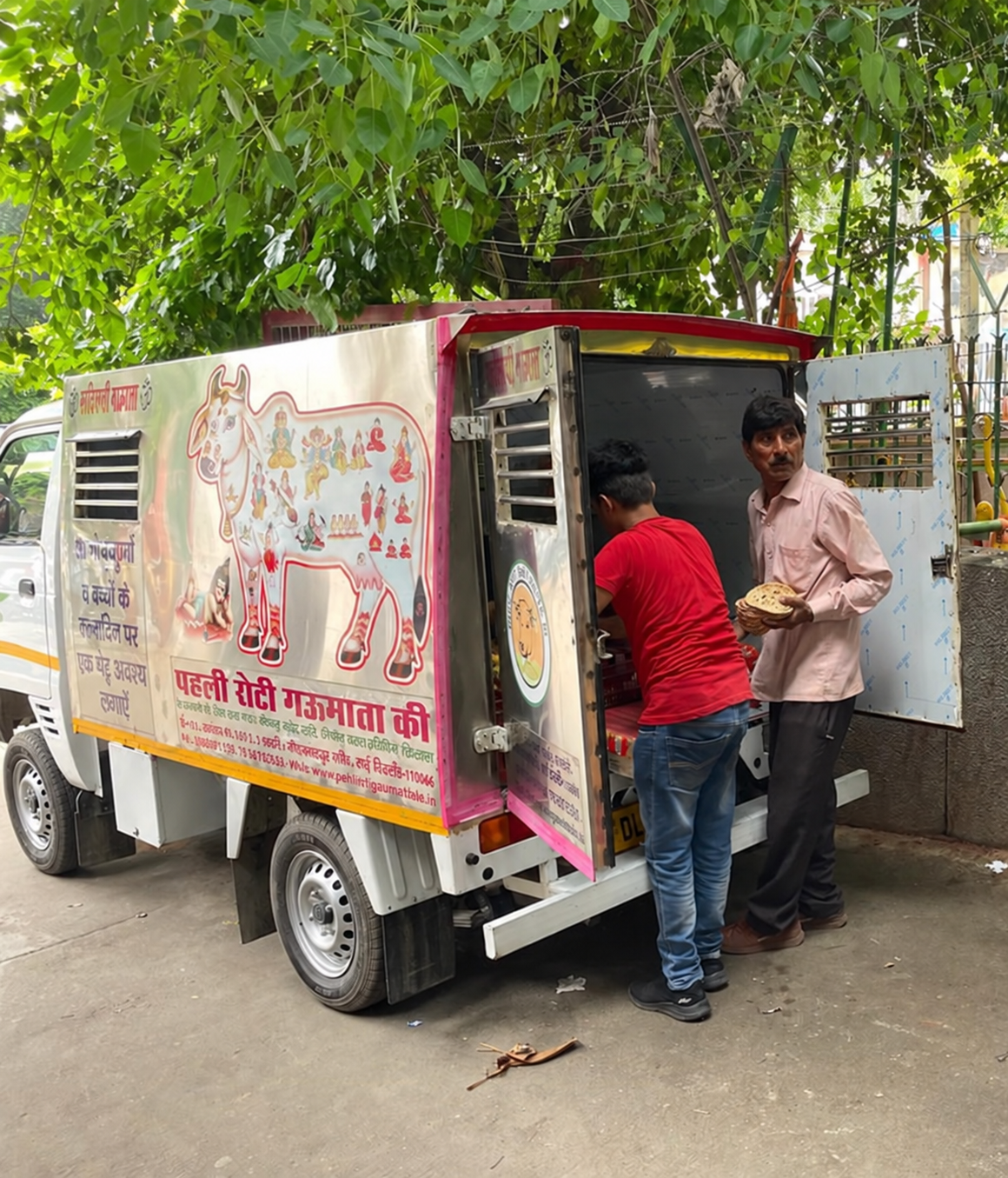
Our e-rickshaw follows a fixed route and empties the box at the same time each day. Boxes are cleaned at every pickup.
Collected rotis are delivered the same day to a partner gaushala on that route, while still fresh. Quantities are logged against the society and the shelter.
Society approval→Installed Roti Box→Daily collection→Gaushala delivery
No cooked sabzi, no oil, no salt, no packaging.
Nothing is stored overnight.
Anything spoiled or contaminated is removed at collection and composted, not passed on.
Gaushala staff confirm receipt at every drop.

Each participating society becomes a fixed stop on a collection route, allowing households and collection staff to work around a consistent daily system.
Boxes are emptied and cleaned during pickup. Rotis that are spoiled or contaminated are separated and not passed on to the gaushala.
Rotis are delivered to a partner gaushala on the route. Quantities are logged against the society and destination, and receipt is confirmed.
Share your society details. We'll confirm whether we can reach you on a current route, or what it would take to add you.
Request a Roti Box→