Households participating
PUBLIC IMPACT RECORD/IMPACT · प्रभाव
ILLUSTRATIVE DATA · VERIFY BEFORE PUBLICATIONIMPACT · प्रभाव
Every roti adds up.
One roti is a gesture. Nine hundred rotis, arriving at the same gate at the same time every day, is a feed supply. We measure the initiative in what actually reaches the gaushala.
MEASURED ROUTE
HOUSEHOLD→COLLECTION BOX→DAILY ROUTE→GAUSHALA
We measure what physically reaches the gaushala.
Figures on this page are illustrative placeholders until verified collection data is inserted.
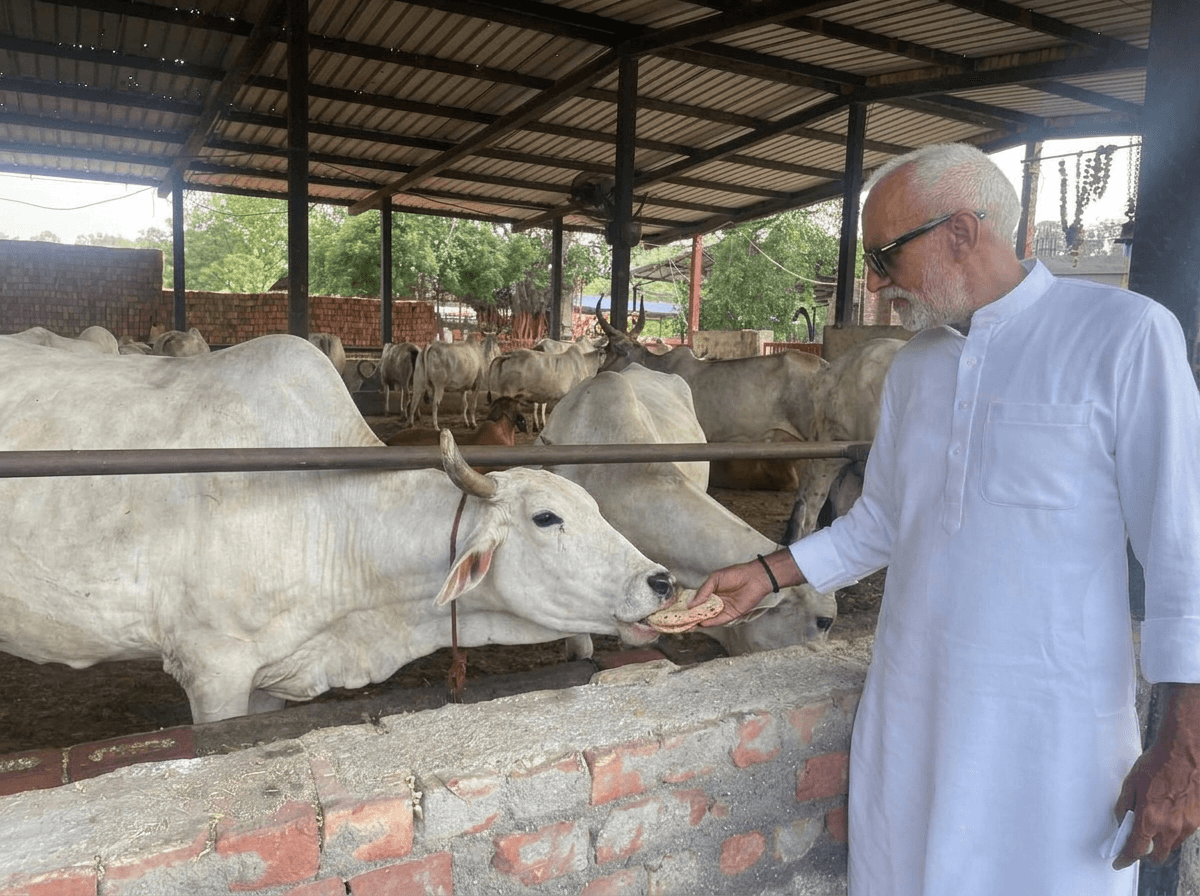 FIELD EVIDENCE · COLLECTION POINT
VERIFIED IMPACT LEDGER
Figures as of [date]. Collection logs available on request.
CUMULATIVE PHYSICAL DELIVERY162,000
Rotis delivered since March 2026
The initiative is measured in the food that completes the journey from participating households to the gaushala.
PHYSICAL FEED DELIVERED6.5 tonnes
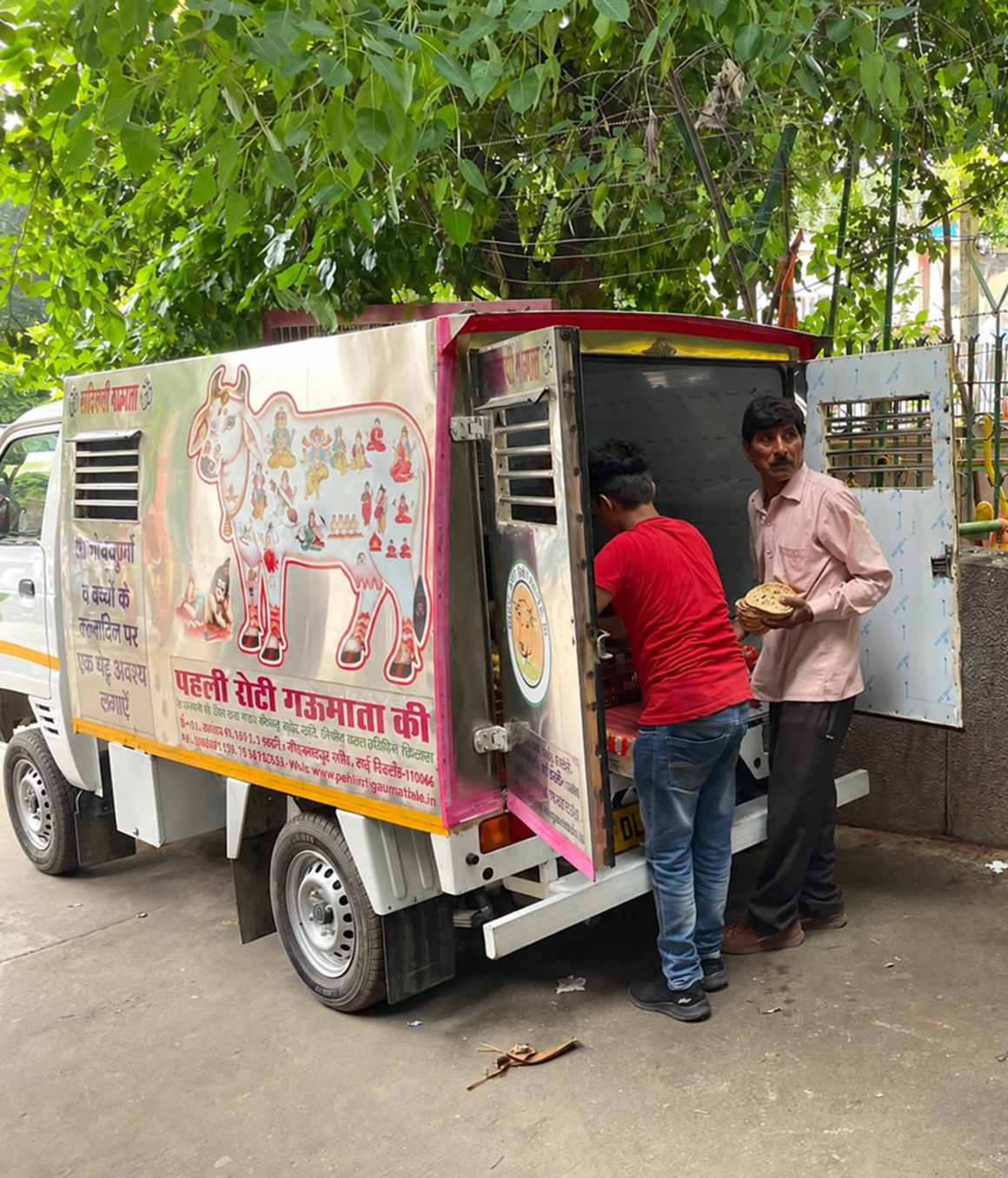
DAILY COLLECTION ROUTE
Collection routes turn small individual contributions into dependable daily delivery.
Societies with a collection point
of feed delivered, diverted from roadsides
Collection days completed without a gap
in feed costs the gaushala did not have to raise
DAILY EFFECT · दैनिक प्रतिफल
Three rotis per cow, every day.
Our partner gaushala is home to 300 cows. The eight societies on our route deliver about 900 rotis a day between them, which works out to roughly three rotis per cow, daily, at a value of about ₹21,000 a month in feed the shelter no longer has to buy.
No household on the route gives more than one roti.
OPERATIONAL EQUATIONDAILY RATION VIEW
3 ROTIS / COW / DAY- Individual household
- 1 roti / day
- Collective intake
- 900 rotis / day
- Partner gaushala
- 300 cows
- Monthly feed value
- ₹21,000 / month
WHY IT WORKS
Built on participation, not fundraising.
Most food-support initiatives ask households for money and convert it into feed. We skip that step. Households give the food directly, in a form they already produce, at no cost to themselves.
That has two consequences. Participation stays high, because the ask never grows. And supply stays steady, because it is not tied to a donation cycle. In 180 days of collection, we have not missed one.
CONVENTIONAL SUPPORT FLOW
HOUSEHOLD→MONEY→FUNDRAISING→PROCUREMENT→FEED
PEHLI ROTI FLOW
HOUSEHOLD→ROTI→COLLECTION→GAUSHALA
THE UNIT OF SCALE · विस्तार
One box. One society. One daily contribution.
One collection point
A single box makes participation possible for every household in the society at once. Our average society contributes about 110 rotis a day from one box.
A daily route
Fixed pickup times turn scattered individual contributions into a predictable daily volume the gaushala can plan around.
Direct delivery
Rotis go to a named gaushala on the same route, the same day. No intermediary, no storage.
BEYOND THE ROTI · व्यापक प्रभाव
What else this does.
Takes food off the street.
Without a collection point, the offering is left on a roadside or under a tree in the hope that an animal finds it. Often none does, and it becomes litter. We have moved 6.5 tonnes of it off pavements and into a feeding trough.
Reduces a shelter’s cash dependence.
Feed is the largest recurring cost at most gaushalas. Every kilogram delivered is a kilogram nobody has to fundraise for.
Gives a society something ongoing.
Participation is daily and visible, not a one-off drive. Eight RWAs now run a collection point as a standing activity.
METHODOLOGY · गणना प्रणाली
Our assumptions.
We would rather show our working than round up.
Standard weight: One roti is counted at 40 grams.
Valuation benchmark: Feed value is calculated at ₹20 per kilogram, benchmarked against [local dry fodder / concentrate feed] rates in [area].
Weight reconciliation: Rotis are counted by weight at collection and logged per society, per day.
Exclusion protocol: Anything spoiled is removed at the box and excluded from the totals.
Schedule exceptions: “Collection days without a gap” counts days the route ran and a delivery was made. It does not count [Sundays / festival days], when we do not operate.
BUILD NOTE
The figures currently shown on this page are illustrative. Replace them with verified collection data before public publication.
SOCIETY EXTENSION · आवासीय सहभागिता
Request a Roti Box→Bring the network to your society.
Every new collection point adds a full society's daily contribution to the gaushala.
Route availability and society approval are checked before installation.